
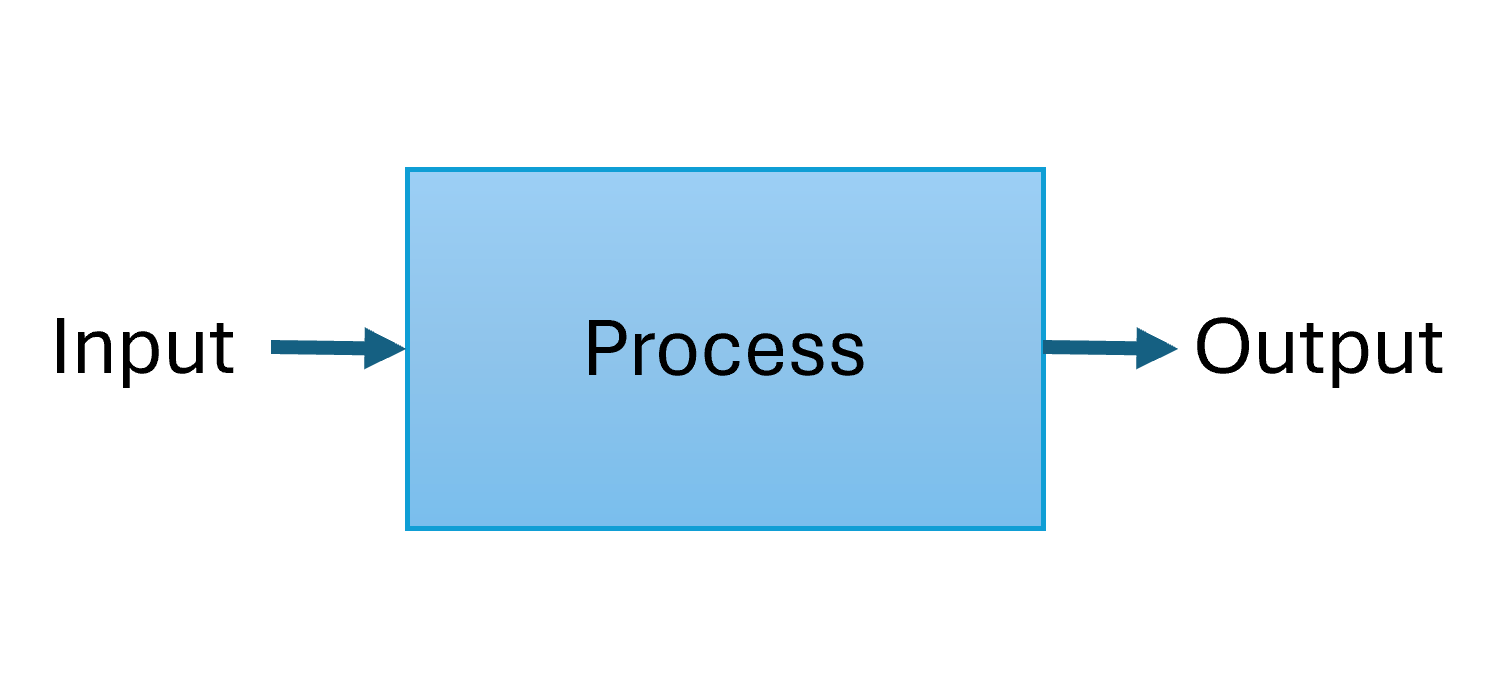
What is a Process
A process is a collection of tasks, steps, or activities that are performed, usually in a specific order, and result in an end product such as a tangible good or the provision of a service.
The definition of a Process
A process would comprise of the steps, processing time, it is interdependent with the other processes, and it requires resources to be assigned to it.
| Steps | Every process is a series of some numbers of steps. It can be presented in the form of instructions which is called the standard operating procedure (SOP) or in visual diagram known as a process map. |
| Processing Time | Simply understanding the steps of a process is not enough to understand the process ; you also have to gather data about the processing time. All processes take a certain amount of time, as processing time varies, normally the average processing time and measures of variation is taken. |
| Interdependencies | Almost any process in a business will be dependent upon one or more other processes. The business itself is a series of linked processes all working toward the same goals. When working with processes during the Six Sigma project, team must be aware of interdependencies because
|
| Resources | Processes require resources. It is important to understand the resources involved for a process, the cost of those resources, and the owners of the processes and resources in question. |
Who is the Process Owner?
A process owner can be:
- A person in charge of a very specific process or function
- A team supervisor or department manager
- An executive-level individual who is probably responsible for a number of processes in his or her division
What does a process owner do?
A process owner will:
- Monitor how the process performs, usually using one or more metrics or regularly reported data elements.
- Understand how the process fits into the overall business, why the output output of the process is critical to business goals, and what inputs feed the process.
- Ensures the process is documented via standard operating procedures (SOPs) and that process documentation is kept current and accurate
- Ensures operators within the process have the resources and training they need to complete their jobs.