
What is FMEA
Failure Modes and Effect Analysis (FMEA) is the tool used to identify risk priorities for various inputs and errors within a process. It sets the stage for root cause analysis. The tool is useful when teams need more detailed information about inputs and possible associated failure points
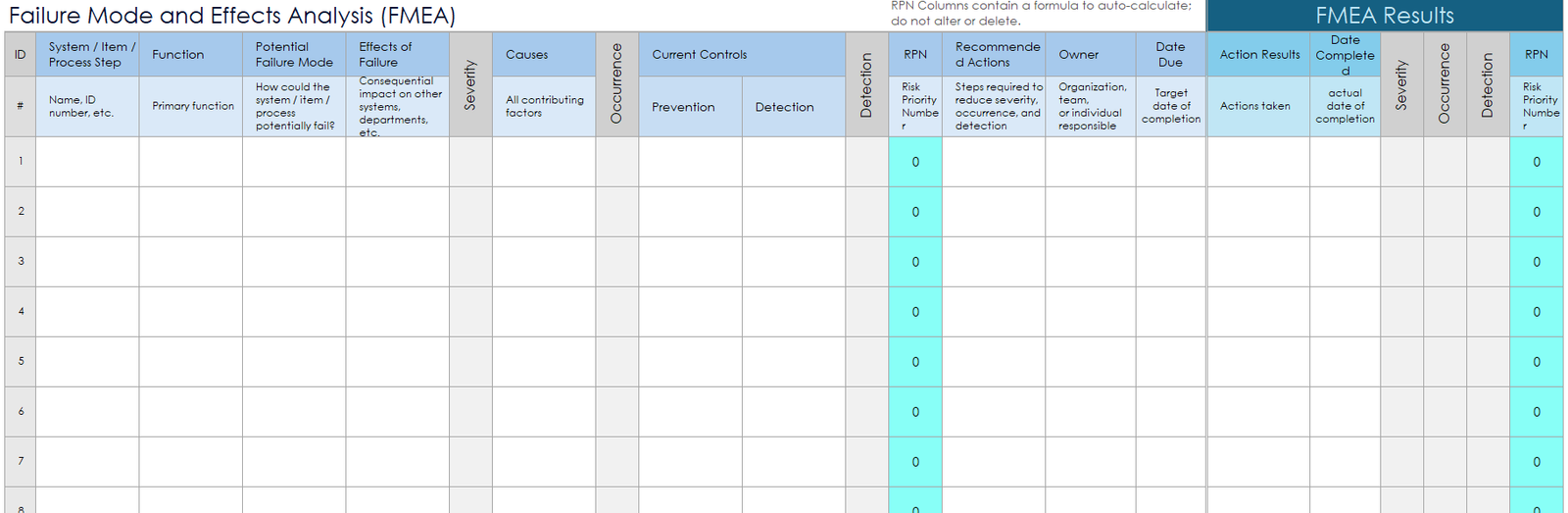
FMEA can be created using a spreadsheet with the following columns:
- Process step or Function
- Potential failure
- Potential failure effect – impacting customer
- Severity (SEV) – of Potential failure (1-10)
- Potential cause of failure
- Occurrence (OCC) – likelihood of failure occurring (1-10)
- Current monitor/ control
- Detectability (DET) – ability to detect failure (1-10)
- Risk Priority Number (RPN) – SEV x OCC x DET
- Recommended changes/ actions
- Who and When?
- Action completed
- SEV
- DET
- RPN
where,
- Column 1 – 9 are completed during the Measure phase
- Column 10 – 15 are mostly completed during Improve phase