
What is Stakeholder Analysis
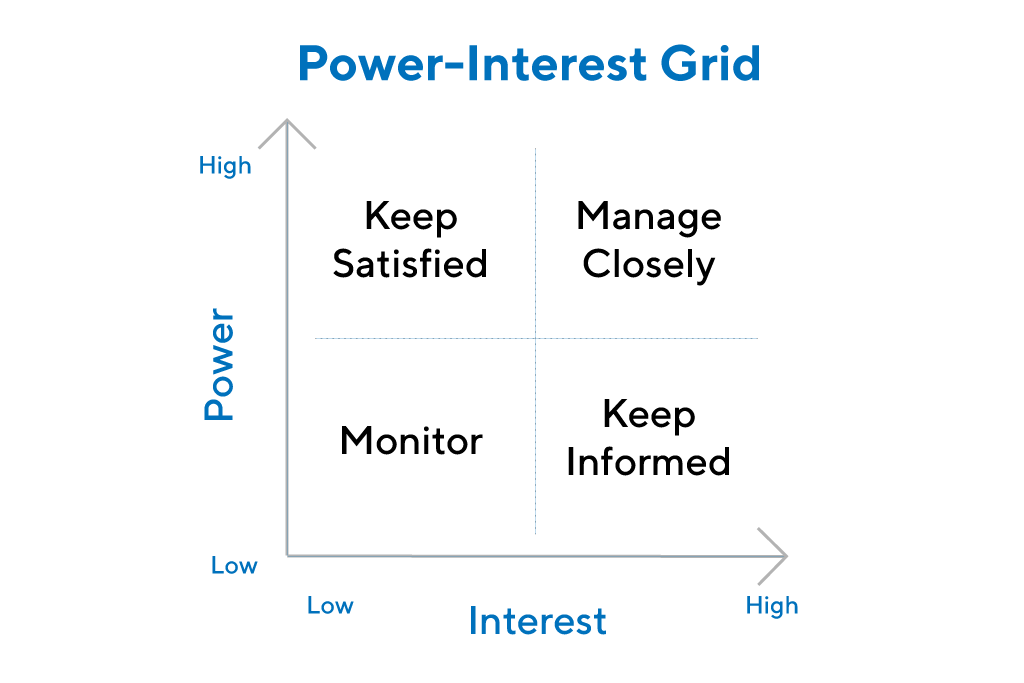
It is a quick way to identify how various people within an organization relate a project and how the team should keep them informed. As shown in the grid, the vertical axis represents the amount of power a person has in the organization. The horizontal axis represents the amount of interest a person has in the team project.
Top Left: Keep Satisfied
Stakeholders that fall into the top left quadrant of the diagram have enough power that they could interfere with a project, but they aren’t extremely interested in the day-to-day outcomes. The team should ensure these individuals are satisfied in whatever way they do interact with the project. Teams might also consult with these individuals at various times during the project.
Sometimes, teams might identify a stakeholder that falls into this section and realize that it would be valuable to the team for that particular stakeholder to be more invested in the project. Six Sigma leaders can work with stakeholders to try to move someone from low interest to high interest categories – this is a political tactic that some teams use to bolster support for a project.
Bottom Left: Minimal Effort
Stakeholders that fall into the bottom left quadrant have the least important connection to a project. Teams will mostly communicate general information about a project via newsletters or email to these stakeholders. While these stakeholders take minimal effort from teams, some situations might exist where teams want to move stakeholders from this box to the lower-right box
Bottom Right: Keep Informed
Individuals in the lower-right box have a strong tie or interest in the project, but do not have access to power to support projects from a resource standpoint. These stakeholders might include employees in departments related to the process being improved or subject matter experts that will be consulted about individual aspects of a project.
While stakeholders in the lower-right quadrant can’t usually bring resources to bear, they can act in support of a project, often in the form of a goodwill ambassador.
Top Right: Key Player
Individuals in the top-right quadrant are either key players regarding a process or executive leaders with the ability to assign resources to a project. These are the individuals teams will report to at various tollgates; often, the executives responsible for the ultimate success of a process or project appear in the top-right quadrant.